Understanding Pathological Demand Avoidance (PDA)
An online learning series
Stream all webinars for 30 days

Stream all webinars for 30 days
In this new online learning series, our team of leading autism specialists will explore Pathological Demand Avoidance (PDA) – a profile on the autism spectrum characterised by an extreme avoidance of everyday demands and expectations. Those with a PDA profile can appear to have better social skills than other autistic people, and often use this ability to create distractions and excuses to mask their difficulties. They may also present as excessively controlling and dominating when feeling anxious.
With the condition often misunderstood and the usual autism approaches of structure and routine ineffective, how can we ensure that we’re meeting the specific needs of young people with a PDA profile at home and in education? Our speakers will provide you with the knowledge and practical skills to answer this question.
Learnings include:
All content is CPD certified and a CPD Certificate of Attendance is available upon request.
| Session | Title | Speaker |
|---|---|---|
| 1.1 | What is PDA? | Tigger Pritchard, Neurodivergent Advocate, Consultant and Trainer at Tigger Training |
| 1.2 | Creating suitable learning environments for PDA students | Chris Bonnello, Autistic Advocate and Award-Winning Writer at Autistic not Weird |
| 1.3 | A teen's guide to PDA | Laura Kerbey, Founder of PAST – Positive Assessments Support and Training |
| 1.4 | PDA and sleep | Dr Jill McGarry, Consultant Clinical Psychologist and Founder of The Sleep Better Doctor |
| 1.5 | Essential strategies for supporting PDA in the classroom | Lynn McCann, Autism Specialist Teacher, Trainer and Author at Reachout ASC |
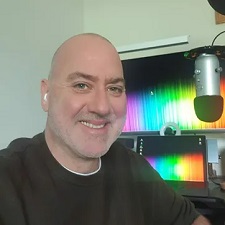
Tigger Pritchard is awesomely neurodivergent. He is an autistic and pathological demand avoidance, advocate, consultant and trainer based in Cornwall.
Tigger has over thirty five years of professional and personal experience of working alongside, learning from and advocating for neurodivergent individuals. Tigger has done this in many different ways: support worker, advocate, teacher, facilitator, trainer, manager, lecturer and friend. Plus he has a lifetime of autistic experience which he is still exploring.
Tigger’s focus is raising understanding and acceptance of neurodiversity; accepting people for who they are and not trying to fit them into any “neurotypical box” and understanding that one size does not fit all.
Using his extensive experience, knowledge, teaching practice and personal insight, Tigger passes on his skills through training and consultancy work both face to face and online by supporting individuals, families, corporate organisations and educational settings on a consultancy basis.

Chris Bonnello is an autistic advocate, neurodiversity speaker, writer, novelist and former teacher (in both mainstream and specialist education). He is a professional member of the Professional Speaking Association, having become a national and international speaker on autism issues, as well as being the multi-award-winning writer behind Autistic Not Weird. He is also the author of the Underdogs novels, a near-future war series featuring autistic and otherwise neurodiverse heroes.
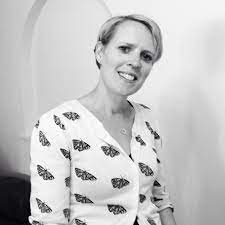
Laura Kerbey has been working with autistic children and teenagers for over 20 years. She started her teaching career in further education, and has worked in the supported learning department of two large mainstream colleges teaching numeracy, literacy, life skills, and childcare. Laura also worked as the life skills coordinator at a residential college for young people with severe physical disabilities.
Laura’s passion has always been working with autistic young people – she believes that they have so much to offer, and yet the education system often fails them because staff do not have the right skills and experience. This is something she is passionate about changing! Laura is an experienced trainer and really enjoys training others.
Laura has a degree in psychology, a Post Graduate Certificate in Special Education (Autism) a PCGE in Life Long Learning and holds a NPQH (National Professional Qualification for Headship). She is also a Surrey Autism Champion and has a NOCN Level 3 Certificate in Working with Students with ADHD and a Diploma in Cognitive Behaviour Therapy. She is ADOS trained and enjoys working as part of a multi-disciplinary team carrying out assessments for possible autism and demand avoidance.
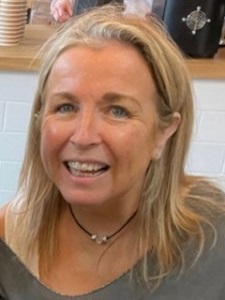
Dr Jill McGarry is a Consultant Clinical Psychologist with nearly 30 years of NHS experience in psychological support for people with mental health issues. Initially her work within the NHS was within brain injury services.
Her main focus for the last 20 years has been in learning disability and autism services and more recently has been extended to incorporate the perinatal period (i.e. mums with babies under two with mental health problems). Throughout this work Jill has built up a wealth of knowledge and experience which has led her to be passionate about the benefits of improving people’s sleep. Recently this has been consolidated with attending courses from two prestigious sleep teams, Oxford University’s SCNI and The Sleep Unlimited as well as the BSM (Behavioural Sleep Medicine) seminars from Arizona.
Currently Jill runs a part time private practice for improving sleep and in 2022 started working part time in the psychology department at Manchester’s NHS Sleep Service. Over the past year Jill has carried out numerous sleep awareness courses for wellbeing teams, private organisations, LD psychiatrists and psychology services as well as co facilitate a national conference on Sleep and ASD/LD. Recently she’s advised Baywater on their NHS England project to develop reasonable adjustment to sleep apnea interventions for people with ASD and/or LD.
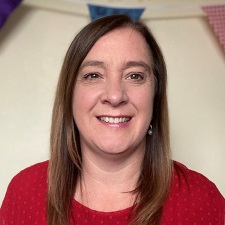
Lynn McCann is an autism specialist teacher based at Reachout ASC in Lancashire. She and her team work in education to build support programmes for individual autistic pupils and provide training across the UK in all aspects of support for autistic children and young people. They are committed to sharing the voices of their young people to help others understand autism from their perspective.
Within 24 hours of your booking, you will receive an email containing personal login details to stream all of the recorded webinars and view the available presentation slides for a 30 day period.
If you don’t receive your login details, please check your spam/junk folder in case it was diverted there. Otherwise for any difficulties accessing the webinars, please contact us at info@autismlearns.co.uk.
| Streaming Cost | £84.99 |
| Session | Title | Speaker |
|---|---|---|
| 2.1 | I was the one who needed to change | Duncan Casburn, Vlogger and PDA Advocate at PDA Dad UK |
| 2.2 | When demands make eating difficult – how anxiety and/or demand avoidance can make eating challenging and distressing | Laura Hellfeld, Neurodivergent Nurse Consulting, Independent Nurse and Sleep Consultant |
| 2.3 | A low demand approach - creating calm proactively through communication | Carly Steele, Autism Specialist, Consultant and Trainer |
| 2.4 | PDA, sensory issues, personal hygiene and grooming – how to help | Rebecca Huseyin, PDA blogger ('A Boy Less Ordinary’) and PDA Parent |
| 2.5 | Being a PDA mum to a PDA child | Sally Cat, Adult PDA Author, Illustrator and Blogger |
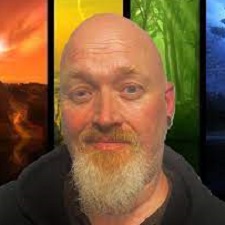
Duncan Casburn is father to a beautiful autistic and pathological demand avoidance (PDA) daughter.
Duncan runs a Facebook group (www.facebook.com/groups/ukaspsg) and is a Carer’s Ambassador for Devon Carers. He is an Ambassador Volunteer for DiAS and also an Ambassador for the PDA Society.
Duncan’s Podcast, PDA Dad UK, is very personal. Duncan is very open about both the joys and challenges of life with a neurodiverse family.
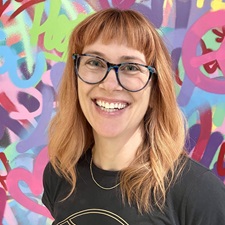
Laura Hellfeld is an AuDHD (Autistic, ADHD) health care professional, consultant and advocate. Their education includes a Masters in Nursing (RN, MSN), licensure in Public Health Nursing (PHN) and certification as a Sleep Consultant. They work as an independent Nurse Consultant to support the neurodivergent community and educate other care professionals to understand their unique support needs.
Laura specializes in PDA, distress behaviours and self-care like eating and sleep. They are also Associate Editor of the upcoming magazine publication, Autistic Revolution.
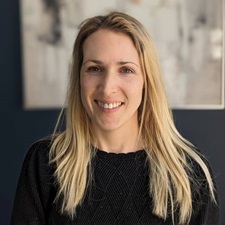
Carly Steel is the author of “Consulting autistic young people on their personal happiness” published in the Good Autism Practice journal.
Carly started her career as a teacher in a specialist college, supporting autistic young people. She completed her masters degree in autism, passing with Distinction before going on to coordinate alternative provisions for a large charity across the East Midlands and London.
Carly became a Director and Head of Education for an outdoor alternative provision, which allowed her to follow her true passion; working more closely with parents, young people and staff.
Carly is autistic herself, providing a unique and rare insight into the autistic experience.
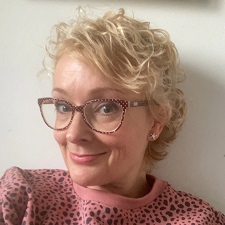
Rebecca Huseyin is mother to a remarkable ten year old autistic boy, JJ, who fits the PDA profile of autism. Rebecca and her family live in a coastal town in Dorset, in the south-west of England with JJ’s dad and their dog, Peanut.
Rebecca is passionate about autism and PDA and always tries to be an advocate for neurodiverse people. Rebecca’s blog, A Boy Less Ordinary, is a window on her bumpy journey as a parent, as she helps JJ navigate his own path by adapting their family life and expectations, empowering herself with knowledge and trying to redefine her understanding of parenting.
Rebecca was shortlisted for the BAPS SEND Bloggers Best Newcomer award in 2021, and is listed as a trusted resource on the PDA Society website.
Sally Cat is an adult PDAer author, illustrator, peer researcher, public speaker and animator, as well as the mum of an eleven-year-old PDA girl. She publishes illustrative memes describing PDA on her Facebook page.
Sally is the author of five books about PDA and associated conditions: PDA by PDAers (about adult PDA), Pathological Demand Avoidance Explained (PDA described through 75 illustrations), Calendar Girl (a mini childhood memoir), Sleep Misfits (about circadian sleep disorders), and Stella Noctella (a rhymed children’s story describing delayed sleep phase syndrome).
Within 24 hours of your booking, you will receive an email containing personal login details to stream all of the recorded webinars and view the available presentation slides for a 30 day period.
If you don’t receive your login details, please check your spam/junk folder in case it was diverted there. Otherwise for any difficulties accessing the webinars, please contact us at info@autismlearns.co.uk.
| Streaming Cost | £84.99 |