Understanding Pathological Demand Avoidance (PDA)
An online learning series
Stream all webinars for 30 days

Stream all webinars for 30 days
In this online learning series, our team of leading autism specialists will explore Pathological Demand Avoidance (PDA) – a profile on the autism spectrum characterised by an extreme avoidance of everyday demands and expectations. Those with a PDA profile can appear to have better social skills than other autistic people, and often use this ability to create distractions and excuses to mask their difficulties. They may also present as excessively controlling and dominating when feeling anxious.
With the condition often misunderstood and the usual autism approaches of structure and routine ineffective, how can we ensure that we’re meeting the specific needs of young people with a PDA profile at home and in education? Our speakers will provide you with the knowledge and practical skills to answer this question.
Learnings include:
All content is CPD certified and a CPD Certificate of Attendance is available upon request.
| Session | Title | Speaker |
|---|---|---|
| 1.1 | What is PDA? | Laura Kerbey, Founder of PAST - Positive Assessments Education Support and Training |
| 1.2 | How can we support pre-verbal children with a PDA profile? Case studies of autistic pre-verbal children in special schools | Lynn McCann, Autism and PDA Specialist Teacher, Trainer and Author at Reachout ASC |
| 1.3 | Using PANDA to support children and young people with PDA at school | Clare Truman, Trainer and Consultant at Spectrum Space Education |
| 1.4 | Supporting PDA-ers in alternative education placements | Clare Truman, Trainer and Consultant at Spectrum Space Education |
| 1.5 | PDA and sleep | Jane Armstrong, Sleep Consultant at Hunrosa |
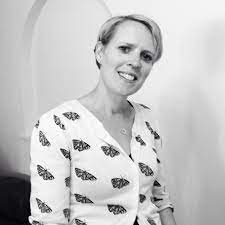
Laura Kerbey has been working with autistic children and teenagers for over 20 years. She started her teaching career in further education, and has worked in the supported learning department of two large mainstream colleges teaching numeracy, literacy, life skills, and childcare. Laura also worked as the life skills coordinator at a residential college for young people with severe physical disabilities.
Laura’s passion has always been working with autistic young people – she believes that they have so much to offer, and yet the education system often fails them because staff do not have the right skills and experience. This is something she is passionate about changing! Laura is an experienced trainer and really enjoys training others.
Laura has a degree in psychology, a Post Graduate Certificate in Special Education (Autism) a PCGE in Life Long Learning and holds a NPQH (National Professional Qualification for Headship). She is also a Surrey Autism Champion and has a NOCN Level 3 Certificate in Working with Students with ADHD and a Diploma in Cognitive Behaviour Therapy. She is ADOS trained and enjoys working as part of a multi-disciplinary team carrying out assessments for possible autism and demand avoidance.
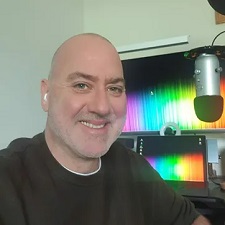
Tigger Pritchard is awesomely neurodivergent. He is an autistic and pathological demand avoidance, advocate, consultant and trainer based in Cornwall.
Tigger has over thirty five years of professional and personal experience of working alongside, learning from and advocating for neurodivergent individuals. Tigger has done this in many different ways: support worker, advocate, teacher, facilitator, trainer, manager, lecturer and friend. Plus he has a lifetime of autistic experience which he is still exploring.
Tigger’s focus is raising understanding and acceptance of neurodiversity; accepting people for who they are and not trying to fit them into any “neurotypical box” and understanding that one size does not fit all.
Using his extensive experience, knowledge, teaching practice and personal insight, Tigger passes on his skills through training and consultancy work both face to face and online by supporting individuals, families, corporate organisations and educational settings on a consultancy basis.
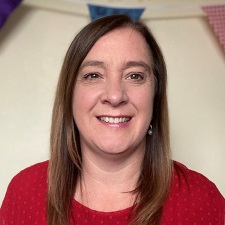
Lynn McCann is an autism specialist teacher based at Reachout ASC in Lancashire. She and her team work in education to build support programmes for individual autistic pupils and provide training across the UK in all aspects of support for autistic children and young people. They are committed to sharing the voices of their young people to help others understand autism from their perspective.

Clare Truman is a teacher, research student and big sister to an autistic young man.
She was director of Spectrum Space Community Interest Company, an educational provider for students with PDA in Surrey until 2019. She now provides distance learning packages for students with PDA who find it difficult to access school as well as providing PDA training to professionals and parents. Both in teaching and research her main interest is supporting those children whose PDA makes it difficult to access education.
Clare’s book, “The Teacher’s Introduction to Pathological Demand Avoidance: Essential Strategies for the Classroom” is published by Jessica Kingsley and available now.
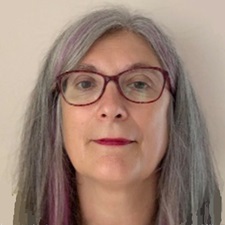
Jane Armstrong is a Sleep Consultant at Hunrosa, who run NHS contracts to support children and young people with disabilities and additional needs, and young people with mental health challenges. They also offer private assessments for young people and adults, and training sessions for professionals.
Jane trained at both Sleep Scotland and the Southampton Sleep Clinic in paediatric sleep support, and recently achieved an OCN Level 6 qualification in Advanced Paediatric Sleep Practitioner Training.
She has a special interest in how sleep can improve our mental health and has trained with MFHA England. She also trained in CBTi (Cognitive Behavioural Therapy for Insomnia), applied to both adults and children, at Oxford University.
Hunrosa means “to dream” in Cornish. They offer help to adults and children across all ages with varying needs to achieve restful sleep. CLICK HERE to take a look at the different ways they can support you.
Within 24 hours of your booking, you will receive an email containing personal login details to stream all of the recorded webinars and view the available presentation slides for a 30 day period.
If you don’t receive your login details, please check your spam/junk folder in case it was diverted there. Otherwise for any difficulties accessing the webinars, please contact us at info@autismlearns.co.uk.
| Streaming Cost | £84.99 |
| Session | Title | Speaker |
|---|---|---|
| 2.1 | Understanding anxiety for people with PDA and what you can do to help | Corrina Wood, Founder of Platypus Training |
| 2.2 | Stop saying "no" - strategies for supporting your young PDA-er at home | Melanie Phipps, PDA Parenting, Inclusion and Intervention Consultant at Positively PDA |
| 2.3 | Calm, connection and co-regulation (CCC®️) – a model for supporting young PDA-ers | Jodie Isitt, Founder of The Nurture Programme |
| 2.4 | Managing conflicting needs as a multiple neurodivergent person | Kyra Chambers, Autistic PDA ADHD parent and Blogger at The Prism Cat |
| 2.5 | PDA, sexuality and gender identity | Riko Ryuki, PDA Adult, Parent and Blogger |
| 2.6 | PDA and social communication | Libby Hill, Consultant Speech and Language Therapist at Small Talk Speech & Language Therapy |
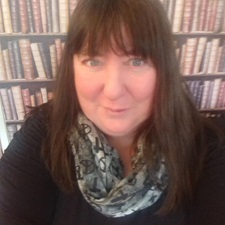
Corrina Wood founded Platypus in 2015, with the aim to challenge people’s thinking about autism and enable them to gain a new perspective. Platypus provides a range of services, workshops and training opportunities to increase awareness and support those living with neurodiversity through the lens of lived experience. This includes; workshops, training, one to one support work with families and individuals, parenting assessments, consultancy and advice.
Working as a Family Services Manager for over 15 years, Corrina developed services for families, children and young people. She has extensive experience of working with families where there are children with autism and ADHD. During that time she was also the Child Protection Officer and Safeguarding Lead. She was a practice supervisor for student social workers on placement and was involved in pilot schemes for preventative and early help provisions working closely with the Local Authority.
Corrina has been developing and delivering workshops and courses for over 10 years and is a qualified tutor. She is also a licensed facilitator for the Barnardo’s Cygnet programme, an evidence based programme for parents of children with autism. Her Masters in autism focussed on developing tools to increase awareness of autism in wider family. Her first book, “Paddy the Platypus Likes Pants”, a tale of sensory sensitivity, is about to be published.
As a parent Corrina has four children with autism and co-occurring conditions including dyspraxia, dyslexia, demand avoidance, processing disorder and selective mutism. Corrina uses a unique blend of research and lived experience to provide thought provoking, interactive and interesting workshops and training courses. Platypus has delivered to a wide range of audiences including; parents, professionals and businesses.
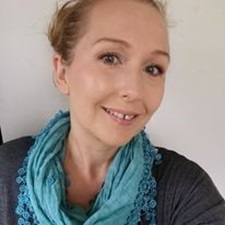
Melanie Phipps is a mum to three boys aged 20, 18 and 11. Her 18 year old has a PDA diagnosis, and her youngest is autistic but doesn’t have a PDA profile. Mel first came across PDA about 11 years ago having struggled using the conventional parenting approaches with her second son, which had worked so well with her eldest. Family life had been very challenging for everyone and reached crisis point in 2012. After experiencing parental blame around her son’s behaviour and no-one being able to provide answers that helped, the words “have you heard of PDA” came from a fellow parent on a facebook support group for attachment disorder. That was the moment that set things on a completely different path, which whilst not easy has resulted in having a self aware and self regulated young man who is engaging in learning, has a part time job, and a bright future ahead of him.
Mel also has experience working with children and young adults with a variety of special educational needs including autism and PDA and has accredited qualifications in Understanding Autism; Supporting Children, Teenagers and Young Adults with Pathological Demand Avoidance; NLP, Hypnotherapy and Coaching and is studying towards a degree in Psychology. She has also completed the two day course by Ross Greene on Collaborative and Proactive Solutions and has delivered PDA training and workshops to parents, carers and educators, and runs, moderates and admin various support groups online.
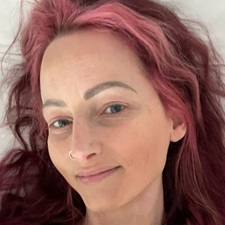
Jodie Isitt is Founder of The Nurture Programme. In her own words:
I am autistic. Nope, scrap that! I’m autistic and absolutely 100% proud and privileged to be able to share not only my experiences with you, but the experiences of all walks of life in the neurodivergent community, in the hope that we can bring about change, and balance, and inspire nurture throughout not just the community, but adventurously the universe!
I was only diagnosed in 2020, over 8 years after my first child was diagnosed (three autistic children altogether) and whilst I have been predominantly using a nurturing parenting style, it never fully translated to myself, therefore I was frequently in a state of shutdown and burnout and unable to tend to my own needs. Impossible really when I wasn’t aware there were any, let alone understand them to be able to advocate for them to be met. I made the mistake of believing I knew everything about autism, until I was diagnosed myself. I now understand and fully support that there simply are no experts. Not one single expert on autistic experience or other neurodivergence, because no one person can simply know and understand every single person on the planet. Our experiences are individual and unique and absolutely beautiful and learning about neurodivergence is one of the most inspiring, fulfilling things I have ever done in my life.
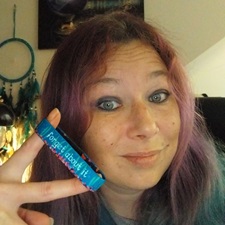
Kyra Chambers is an autistic/ADHD parent who also has a Pathological Demand Avoidance profile. She is a proud parent of two neurodivergent children and married to a wonderful man who is very forgiving of his forgetful yet often hyperfocused wife!
When Kyra is not supporting her family, you’ll find her as her alter ego: The Prism Cat – Reflections On Neurodiversity, producing content which provides an honest insight into what it’s like being neurodivergent, helping out in autistic support groups and writing various articles which she hopes will help families, caregivers and professionals. Her particular focus lies around Pathological Demand Avoidance, Sensory Integration, Late (Adult) Diagnosis, Inclusive Education and Mental Health.
Kyra was honoured to speak at The PDA Space Summit in 2022 and will be returning again this year. She helps run and moderate several autistic led Facebook groups ranging from localised support to reaching international people looking for peer support and understanding. Kyra also volunteers with The PDA Society.
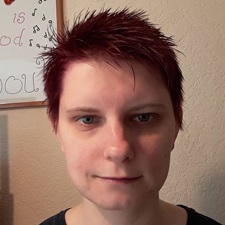
Riko Ryuki is a PDA-er and parent to three autistic/PDA children.
Riko originally started their Facebook page as a means to store information and articles about PDA for their own use. However their page has developed into a destination for others to learn about this profile on the autism spectrum.
Riko shares factual information, personal experiences, debate topics, fun facts, anecdotes, jokes, stories, blog posts and articles, book reviews and a whole host of other things. As the PDA community grows, they aim to share as much useful information as they can find to help families find ways to cope with the rollercoaster that is being PDA and/or living with PDA individuals. For more information you can visit their blog at www.dragonriko.wordpress.com.

Libby Hill is a multi-award winning speech and language therapist who set up her organisation, Small Talk Speech and Language Therapy, to bridge the ever-widening gap between the increasing number of children with communication problems and the shortfall within the NHS.
Libby has worked with hundreds of children with PDA since she appeared as part of the Channel 4 series, Born Naughty. Libby works within the PDA community to conduct assessment and therapy for children and young people with PDA, EHCP and Tribunal support, Training on PDA for parents and staff.
Within 24 hours of your booking, you will receive an email containing personal login details to stream all of the recorded webinars and view the available presentation slides for a 30 day period.
If you don’t receive your login details, please check your spam/junk folder in case it was diverted there. Otherwise for any difficulties accessing the webinars, please contact us at info@autismlearns.co.uk.
| Streaming Cost | £84.99 |