Understanding & Managing Distressed Behaviour
An online learning series
Stream all webinars for 30 days

Stream all webinars for 30 days
In this online learning series, our team of leading autism specialists will explore the causes of distressed behaviour in autistic children and young adults, and offer strategies which can make a positive difference. We’ll cover destructive behaviours (throwing objects or breaking property), self injury (head banging or hand biting) and hurting others (hitting, kicking or hair pulling), and provide practical advice for home and school settings.
You can choose to watch the webinars live and seek personalised advice from our speakers, and/or stream the recordings afterwards and watch at your convenience over the next 30 days.
Learnings include:
All content is CPD certified and a CPD Certificate of Attendance is available upon request.
| Session | Title | Speaker |
|---|---|---|
| 1.1 | Are we focusing on the right thing? What’s the real goal when we talk about improving behaviour in our young autistic people? | Allison Hope-West, Independent autism consultant and trainer |
| 1.2 | What’s really going on here? An insider’s view on understanding autism and how autistic young people experience the world | Amanda Hind, Autism and SEND Consultant |
| 1.3 | Masking, distress, meltdown and burnout – understanding the correlation between masking and behaviour (and what you can do to help) | Dr Sue Granger, Autism Advisor for Schools at West Berkshire Council |
| 1.4 | Supporting black autistic children’s behaviour | Marguerite Haye, Neurodivergent Teacher and Consultant at What’s the Big E? |
| 1.5 | Can't not won't: what works best when it comes to managing school avoidance | Eliza Fricker, Author and Illustrator, Speaker, and Writer of the blog Missing the Mark |
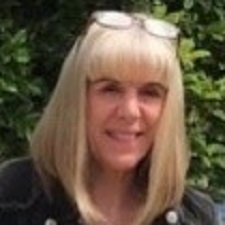
Allison Hope-West, BA (Hons), PGCE, Dip SEN, M(ed) Autism, has vast experience of being a Principal in a number of ASD specific schools and colleges, and has worked for the University of Birmingham as a distance learning tutor for twenty years on the Masters autism course. During her time as the Director of Autism for the Priory Group, she supported over 35 schools, colleges, CAHMs units and residential provision, and developed accredited autism training for all staff which was internationally recognised. She also worked for The Cambian Group as Director of placements.
Allison now offers consultancy to senior leadership teams, training and support for parents. She lives In Hampshire with her husband and likes to spend time touring in her motorhome with her grandson.
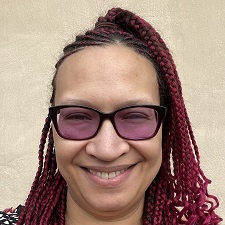
Amanda Hind has a unique perspective of autism as she is autistic (diagnosed as an adult), her children (young adults) are autistic, she has specialised in teaching autistic children, and she is an autism researcher.
She is a highly experienced teacher; and has taught in mainstream primary and secondary schools, special schools, and alternative provisions. She is also a qualified SENCo, and was a SENCo in a mainstream secondary school. Although no longer school-based, Amanda still enjoys working with children and young people, and specialises in SEN tutoring for children of all ages, and mentoring for neurodivergent adults, young adults, and teenagers. She is also a study skills tutor for autistic/ND university students receiving DSA.
Amanda is an experienced autism speaker, trainer and consultant, having travelled across the country to deliver talks and training sessions on a wide variety of topics to a range of attendees, including parents and professionals from education, health and the care sector.
Early this year Amanda passed an MSc in Psychology. This included a research project on autism in Black and Black mixed-heritage late-diagnosed autistic women, including Amanda herself. She first presented her findings at an international autism conference in Poland last autumn, and subsequently at other events in England. Her previous postgraduate research looked at effective transition from primary school to secondary school for autistic children.
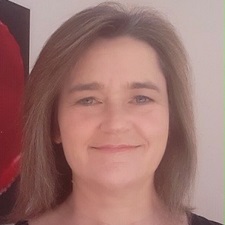
Sue Granger is Autism Advisor at West Berkshire Council, and Autism Support Specialist at Owl Therapy Centre
Sue is an experienced trainer with extensive experience working with autistic children and adults in a variety of settings, including mainstream and special needs schools. She has a strong educational background in cognitive science and special educational needs to doctorate level and is highly experienced in working alongside school leadership teams, in multi-disciplinary teams and with parents and carers. Sue has a special interest in supporting mental health and wellbeing, particularly in autistic girls.
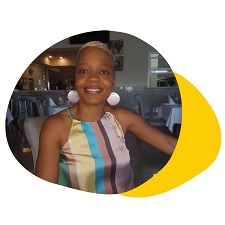
Marguerite Haye is the Associate Editor of Special Educational Needs Jungle. She is a volunteer for IPSEA providing legally based advice to families and is a Trustee for the Charity Disability Direct as well as Raising Awareness Development Language Disorder (RADLD).
Marguerite uses her extensive experience to offer assessments of needs and 1:1 tutoring for children with special educational needs or disabilities.
Having worked in the education section for over 15 years as a SEND teacher and a Senior Leader, Marguerite can recognise individual learning abilities and uses her initiative to tailor learning programs to meet each child and young person’s needs.
Marguerite has experience teaching children of all ages with different needs such as Fragile X, Autism, PDA, ADHD, Dyslexia, Down Syndrome, significant and moderate complex needs.
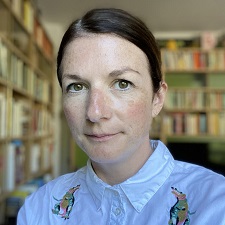
Eliza Fricker is the author and illustrator of Sunday Times bestseller Can’t not won’t: A Story About A Child Who Couldn’t Go To School, published by Jessica Kingsley in February 2023. She is also author of The Family Experience of PDA. Her third book Thumbsucker will be published in December 2023.
As well as writing and illustrating her own books Eliza also co-authors with others, including Laura Kerbey’s book The Educators Experience of Pathological Demand Avoidance, Square Pegs, and Nurturing Your Young Autistic Person by Cathy Wassell, and several upcoming books with Dr Naomi Fisher.
Missing the Mark began in early 2020 as an illustrated blog. Not only an artistic expression of difference in today’s society, Missing the Mark also aims to serve as a thought provoking and valuable contribution to the visibility, acceptance and support of families like Eliza’s. It acts as a way to communicate difficult circumstances with teachers, educators, social workers, other parents and friends of those also experiencing these issues, with the hope of providing a drop more humanity in the world.
Within 24 hours of your booking, you will receive an email containing personal login details to stream all of the recorded webinars and view the available presentation slides for a 30 day period.
If you don’t receive your login details, please check your spam/junk folder in case it was diverted there. Otherwise for any difficulties accessing the webinars, please contact us at info@autismlearns.co.uk.
| Streaming Cost | £84.99 |
| Session | Title | Speaker |
|---|---|---|
| 2.1 | Setting priorities: the foundations of care to support autistic young people with eating | Laura Hellfeld, Neurodivergent Nurse Consulting, Independent Nurse and Sleep Consultant |
| 2.2 | Are you helping or exacerbating the behaviour? How to adapt your teaching style to help reduce stress and distress in autistic students | Pete Wharmby, Autistic Speaker, Writer and Advocate |
| 2.3 | Supporting distressed behaviours in the home - applying low arousal approaches | Professor Andy McDonnell, Professor of Autism Studies at Birmingham City University, and Director and Clinical Psychologist at Studio III Clinical Services |
| 2.4 | Anxiety and behaviour - helping autistic teens to manage their anxiety and reduce distressed behaviour | Dr Theresa Kidd, Director and Principal Clinical Psychologist at The Kidd Clinic |
| 2.5 | Teaching autistic teenagers about puberty and sex | Lynne Moxon, Independent Psychologist, Trainer and Speaker |
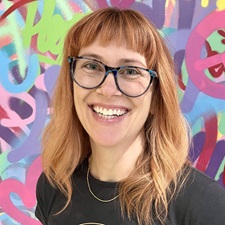
Laura Hellfeld is an AuDHD (Autistic, ADHD) health care professional, consultant and advocate. Their education includes a Masters in Nursing (RN, MSN), licensure in Public Health Nursing (PHN) and certification as a Sleep Consultant. They work as an independent Nurse Consultant to support the neurodivergent community and educate other care professionals to understand their unique support needs.
Laura specializes in PDA, distress behaviours and self-care like eating and sleep. They are also Associate Editor of the upcoming magazine publication, Autistic Revolution.
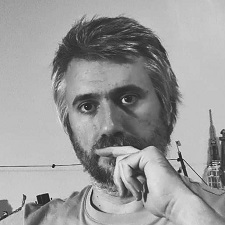
Pete Wharmby is an autistic speaker, writer, tutor and parent, who is working to improve autism acceptance in society by sharing his insights and experiences of autism.
Pete has spoken at many conferences and events, often as the keynote speaker, on topics such as autism in education, the experience of autistic students and teachers, the importance of monotropism and special interests.
He is also an autistic parent and home-schooler.
Pete has written two books on the autistic experience – 2022’s What I Want to Talk About, published by Jessica Kingsley Publishers, and 2023’s Untypical, published by HarperCollins.
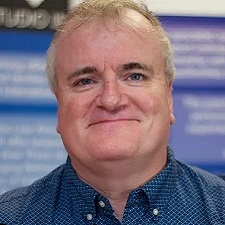
Professor Andrew McDonnell is Consultant Clinical Psychologist to, and Director of, Studio III Clinical Services and also Director, Clinical Consultant and Team Leader to Studio III Training. Andrew formerly worked as Clinical Psychologist to Monyhull Hospital Birmingham and has particular interest in the design of community settings for people who challenge. He has extensive experience of working with service users with a learning disability and/or an ASD who self harm.
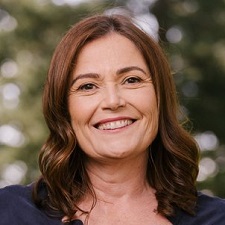
Dr Theresa Kidd is Director and Principal Clinical Psychologist at The Kidd Clinic in Western Australia.
Theresa is committed to helping neurodivergent individuals of all ages to minimise their challenges, increase their strengths and to achieve their life goals. Having many neurodivergent family members herself, she is also passionate about increasing family quality of life by assisting families to be as strong and healthy as possible.
As clinic director, Theresa spends her time supervising other psychologists, seeing a small number of clients and providing parent and problem-solving consultation sessions. In addition, she writes and facilitate workshops and speaks publicly on autism and anxiety, and PDA. She continues to work part-time as a postdoctoral research fellow at the Centre for Emotional Health at Macquarie University in Sydney.
Lynne Moxon is an Educational Psychologist who works as a consultant for ESPA a specialist service for autistic adults. She has just retired from her post as a senior lecturer at Northumbria University but continues to lecture on the Masters in Autism course.
Lynne trains nationally and internationally in the field of autism specialising in sex and relationship education. She is currently preparing a distance learning course on SRE for Birmingham University.
Within 24 hours of your booking, you will receive an email containing personal login details to stream all of the recorded webinars and view the available presentation slides for a 30 day period.
If you don’t receive your login details, please check your spam/junk folder in case it was diverted there. Otherwise for any difficulties accessing the webinars, please contact us at info@autismlearns.co.uk.
| Streaming Cost | £84.99 |