Supporting Autistic Girls
An online learning series
Stream all webinars for 30 days
Stream all webinars for 30 days
This online learning series exclusively looks at how we can better understand and support autistic girls and young women.
Our team of leading autism specialists (many of whom are autistic themselves) will explore the differences in how autism presents in girls and what specific adjustments are needed at home and school. We’ll uncover how masking impacts mental health, examine sensory processing and eating disorders, and look ahead to the challenges of adulthood – puberty, periods and relationships. Throughout, our speakers will share a host of practical strategies to make a positive difference to you and the autistic girls you support.
Learnings include:
All content is CPD certified and a CPD Certificate of Attendance is available upon request.
| Session | Title | Speaker |
|---|---|---|
| 1.1 | Autism in girls and women: why can getting a diagnosis be difficult? | Dr Rachel Moseley, Principal Academic in Psychology and Researcher Social, Cognitive, Clinical and Affective Neuroscience (SCCAN) at Bournemouth University |
| 1.2 | Identifying key issues for autistic girls at school and providing practical school-based support strategies | Lynn McCann, Autism Teacher, Trainer, Author and Consultant at Reachout ASC |
| 1.3 | The cost of fitting in – masking, camouflaging and the impact on mental health and wellbeing | Dr Hannah Louise Belcher, Lecturer at King's College London and Author of "Taking off the Mask: Practical Exercises to Help Understand and Minimise the Effects of Autistic Camouflaging" |
| 1.4 | The “invisible” Black female’s perspective | Lauren-Rochelle Fernandez, Consultant, Trainer and Founder of Mask Off |
| 1.5 | Anxiety in autistic girls and women – what’s sensory got to do with it? | Laura Graham, Independent Occupational Therapist |
| 1.6 | PDA girls and women | Sally Cat, Adult PDA Author, Illustrator and Blogger |
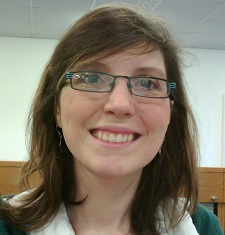
Dr Rachel Moseley completed her PhD in cognitive neuroscience at the University of Cambridge, where she studied brain function and structure in autistic people. After her PhD, Rachel took up two positions as a postdoctoral researcher to pursue this research further. In the course of learning more about the presentation of autism in girls and women, she sought assessment and was diagnosed as autistic, which helped answer a lot of questions.
Rachel is now a Principal Academic at Bournemouth University, where her research centres around understanding the challenges faced by autistic adults – most notably around mental health, self-injury and suicidality, ageing and late-diagnosis.
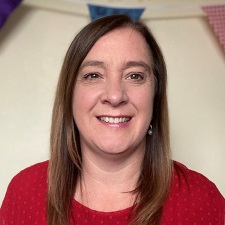
Lynn McCann is an autism specialist teacher based at Reachout ASC in Lancashire. She and her team work in education to build support programmes for individual autistic pupils and provide training across the UK in all aspects of support for autistic children and young people. They are committed to sharing the voices of their young people to help others understand autism from their perspective.
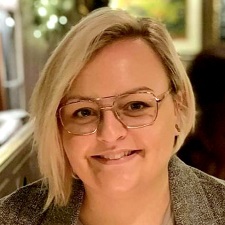
Dr Hannah Belcher is a Lecturer at King’s College London in User-Led research. Autistic herself, she is passionate about improving diagnosis for girls and women, and looking at the effects of masking and mental health. Dr Belcher is the author of “Taking off the Mask: Practical Exercises to Help Understand and Minimise the Effects of Autistic Camouflaging”.
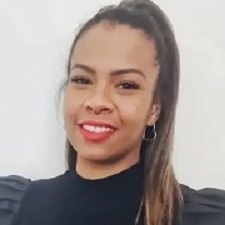
Lauren-Rochelle Fernandez is a Neurodivergent Consultant and Trainer with a focus on autism within marginalised communities. Late diagnosed, she found a lack of services, support, and representation available. Lauren’s experience highlighted changes that desperately needed to be made, after spending brief time as an inpatient and struggling to navigate access to appropriate services, she founded Mask Off CIC.
Through her organisation, she advocates as an ambassador for Neurodiversity, providing her own training and hosting discussions across several mainstream services and organisations.
Lauren endeavours to be the representation that is often missed, and to provide experience-informed solutions.
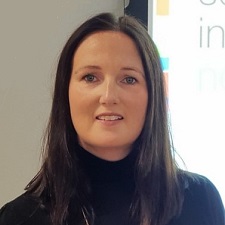
Laura Graham is an independent occupational therapist with over 20 years’ experience and holds a post graduate certificate in Sensory Integration from the University of Ulster.
Laura is co-author of the book, “How to Help Developmental Coordination Disorder (Dyspraxia)” published in 2022 and has spoken at many events and conferences.
Laura was awarded the Queens Nurses Institute Award for Innovation and Leadership in 2010 for her role in developing a community-based behaviour and sensory clinic for young adults with sensory processing needs.
Day to day Laura provides occupational therapy consultation, assessment, and intervention to several schools, both mainstream and specialist settings. Laura also works with a number of local authorities and adoption agencies to support children and young people with sensory processing issues linked to developmental trauma.
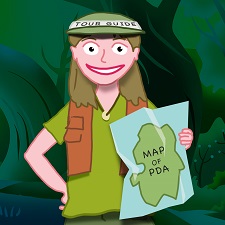
Sally Cat is an adult PDAer author, illustrator, peer researcher, public speaker and animator, as well as the mum of an eleven-year-old PDA girl. She publishes illustrative memes describing PDA on her Facebook page.
Sally is the author of five books about PDA and associated conditions: PDA by PDAers (about adult PDA), Pathological Demand Avoidance Explained (PDA described through 75 illustrations), Calendar Girl (a mini childhood memoir), Sleep Misfits (about circadian sleep disorders), and Stella Noctella (a rhymed children’s story describing delayed sleep phase syndrome).
Within 24 hours of your booking, you will receive an email containing personal login details to stream all of the recorded webinars and view the available presentation slides for a 30 day period.
If you don’t receive your login details, please check your spam/junk folder in case it was diverted there. Otherwise for any difficulties accessing the webinars, please contact us at info@autismlearns.co.uk.
| Streaming Cost | £84.99 |
| Session | Title | Speaker |
|---|---|---|
| 2.1 | Preparing autistic girls for puberty | Kate E Reynolds, Author, Public Speaker, Consultant and PhD Researcher |
| 2.2 | A sensory journey through periods/menstruation | Emma Reardon, Director of Autism Wellbeing and Dr Rorie Fulton, Director of Autism Wellbeing |
| 2.3 | Autism pride, understanding unhealthy relationships, unintentional gaslighting, mate crime, and learning to thrive | Joely Williams, Autistic, Disabled Autism and Mental Health Advocate; Motivational Speaker; World ANCA Autism Ambassador; Author of "AspergerWorld"; and owner of My Autistic Wings Autism Advocacy |
| 2.4 | Perspectives and insights from older autistic women – a conversation | Libby Hill, Consultant Speech and Language Therapist at Small Talk Speech and Language Therapy and Sylvia Stanway, Chair of Talking SENse |
| 2.5 | Autism, sensory processing, and eating disorders – a female perspective | Rachael Thompson, Director and Head of Therapy at Cairn Education, and Director of Our Sensory Worlds |
| 2.6 | Safeguarding autistic girls and women – effective sex and relationships education | Dr Carly Jones MBE, Autistic Advocate, Consultant and Author |
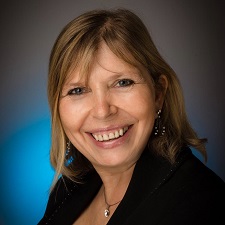
Kate E Reynolds is mother to two young people on the autism spectrum, one who was epileptic and one has learning/intellectual disabilities. She worked for the UK’s National Health Service for 18 years, largely in HIV and sexual health. Kate has written numerous articles and 15 books, most published by Jessica Kingsley Publishers about aspects of relationships, sexuality, autism, female autism and learning/intellectual disability. She runs workshops for parents and works closely with professionals, as a trainer, consultant and researcher.
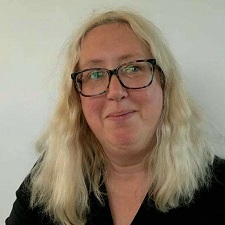
Emma Reardon is a director of Autism Wellbeing CIC – a small, neurodiverse team of professionals and clinicians united by a desire to find ways for autistic and non-autistic people to collaborate equitably and successfully. Her professional career spans 25 years within social care as a support worker, registered service manager, and in service development and commissioner relationships.
Emma has qualifications in community mental health, management, and counselling, and holds a MA in Professional Practice. Her current PhD research is about perceptions of autism held by Community Mental Health Teams.
Most recently, Autism Wellbeing’s Sensory Trauma course was undertaken by Integrated Autism Service clinicians in Wales. Emma is passionate about mixing her professional and lived experience of autism in her guest lectures, presentations and workshops to create spaces where people have opportunities to share, connect, and find common ground. She can also offer environmental sensory assessments of workplaces, schools, care services, and workplace mentoring.

Joely Williams is an award winning autism activist, advocate, motivational speaker and author. She was diagnosed with autism and ADHD when she was aged two.
Joely has spent years learning to understand her quirks and embrace her differences. Joely’s biggest passion is to spread understanding of autism’s hidden hardships, depths, quirks and gifts.
Joely travels the country for her activism business where she delivers motivational speeches, autism presentations and campaigns for change.
Joely is author of the best selling book “AspergerWorld: My Fairy Jam Jar’”; a highly reviewed, empowering and educational resource book.
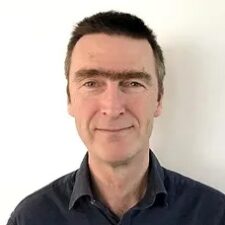
Dr Rorie Fulton is Founding Director of Autism Wellbeing – a small, neurodiverse team of professionals and clinicians united by a desire to find ways for autistic and non-autistic people to collaborate equitably and successfully. Rorie has a background in education, academic research and mental health advocacy. He has written or co-written (with Kate Richardson) a number of papers and learning resources on subjects including autism, effective communication, learning disabilities and advocacy. Rorie has completed training in Interoceptive Awareness, Attachment, Sensory Attachment Intervention and The Just Right State programme.

Libby Hill is a multi-award winning speech and language therapist who set up her organisation, Small Talk Speech and Language Therapy, to bridge the ever-widening gap between the increasing number of children with communication problems and the shortfall within the NHS.
Libby has worked with hundreds of children with PDA since she appeared as part of the Channel 4 series, Born Naughty. Libby works within the PDA community to conduct assessment and therapy for children and young people with PDA, EHCP and Tribunal support, Training on PDA for parents and staff.
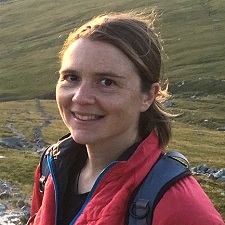
Rachael Thompson, BSc, PGCE with QTS, PGCert Sensory Integration, and MSc Occupational Therapy, is Head of Therapy at Cairn Education. Rachael has worked at independent specialist colleges for over 10 years in roles including Tutor, Occupational Therapist, Head of Education and Vice Principal.
As an autistic individual and Occupational Therapist, Rachael utilises personal and professional experience alongside the latest research to explore sensory processing differences and specifically how sensory processing differences can impact health, well-being and quality of life.
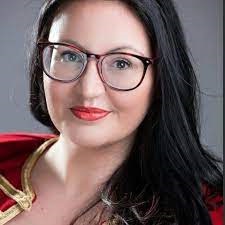
Dr Carly Jones MBE is an autism advocate who has worked for the inclusion of autistic women and girls since 2008. She has spoken on news channels, at universities, and in Parliament, and was the first British autistic woman to address the United Nations on autistic women’s rights.
Carly was publicly appointed a member of the UK Honours Committee, is an independent panel member for the Ministry of Justice and works for the Heathrow Accessibility Advisory Group.
Within 24 hours of your booking, you will receive an email containing personal login details to stream all of the recorded webinars and view the available presentation slides for a 30 day period.
If you don’t receive your login details, please check your spam/junk folder in case it was diverted there. Otherwise for any difficulties accessing the webinars, please contact us at info@autismlearns.co.uk.
| Streaming Cost | £84.99 |