Supporting Speech, Language & Social Communication
An online learning series
Stream all webinars for 30 days

Stream all webinars for 30 days
Interacting and communicating with others can be hugely challenging for people on the spectrum. Communication difficulties can have an adverse effect on learning, behaviour and mental health. However with suitable and timely interventions, autistic people can overcome many of the communication barriers they face and fulfil their potential, whatever that might be.
This online learning series will explore the different communication challenges autistic individuals experience, and provide you with the insights and practical strategies to help. By attending you’ll gain an exclusive audience with a team of specialist autism therapists and researchers, who’ll take you through the approaches which can make a real difference at home and in the classroom.
Learnings include:
All content is CPD certified and a CPD Certificate of Attendance is available upon request.
| Session | Title | Speaker |
|---|---|---|
| 1.1 | Communication development in autistic children | Amanda Thompson, Speech and Language Therapy Team Lead and Highly Specialist ASD Speech and Language Therapist at Surrey County Council |
| 1.2 | Creating an environment of acceptance and support at home to promote successful communication | Aaron Yorke, Specialist Teacher and Autism Advisor |
| 1.3 | Social communication skills at school – how to help in the mainstream classroom | Helen Cooke, Speech and Language Therapist and Clinical Lead for Autism in the Mainstream Schools Team at Barnet, Enfield and Haringey Mental Health Trust |
| 1.4 | Can talk, won’t talk – autism and selective mutism | Libby Hill, Consultant Speech and Language Therapist, Small Talk Speech and Language Therapy |
| 1.5 | Emotional regulation in autistic individuals | Dr Fiona McCaffrey, Head of Research and Development at Middletown Centre for Autism |
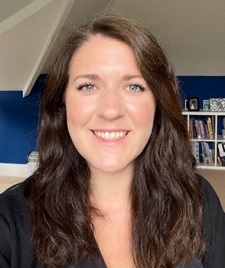
Amanda Thompson is a Highly Specialist Speech and Language Therapist and the Autism Lead for the North West Surrey Speech and Language Therapy service. Amanda also leads the Speech and Language Therapy Team at the largest Complex Social Communication Needs School in Surrey.
Amanda has worked in a variety of settings over the years including NHS clinics, specialist autism schools, specialist speech and language schools and autism centres. Amanda has experience working with children, young people and adults at all ages and abilities across the autism spectrum.
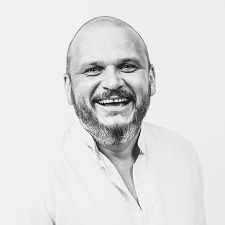
Aaron Yorke is a specialist teacher and autism advisor working part time for Local Authorities across the West Midlands. He is also a published author and autism speaker, and has set up Accepting Behaviour which is an online platform sharing acceptance based approaches through online workshops, webinars, and offering free YouTube content. You can find out more by visiting www.acceptingbehaviour.com.
Helen Cooke is a speech and language therapist, and clinical lead for autism in the early years and mainstream teams in Barnet, Enfield and Haringey Mental Health Trust. One of the most joyful parts of her job is working with parents, carers, peers and professionals to learn and understand more about autism together. In doing so, they breakdown misunderstandings that come from a fear of difference. Working with autistic children and young people teaches Helen every day about the range, diversity and extraordinary quality of their abilities. She looks forward to continuing the learning with you in this webinar series.
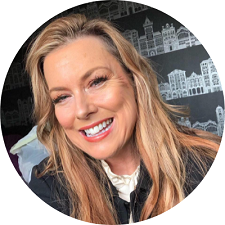
Libby Hill is a multi-award winning speech and language therapist who set up her organisation, Small Talk Speech and Language Therapy, to bridge the ever-widening gap between the increasing number of children with communication problems and the shortfall within the NHS.
Libby has worked with hundreds of children with PDA since she appeared as part of the Channel 4 series, Born Naughty. Libby works within the PDA community to conduct assessment and therapy for children and young people with PDA, EHCP and Tribunal support, Training on PDA for parents and staff.
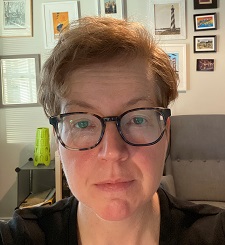
Dr Fiona McCaffrey is Head of Research and Development at Middletown Centre. Fiona has a graduate certificate in Autism, a Master’s in Counselling and is a Chartered Psychologist with the British Psychological Society. She has worked individually and in group sessions with autistic teens and their parents. Fiona has spoken and presented nationally and internationally on autism and the work of Middletown Centre.
Within 24 hours of your booking, you will receive an email containing personal login details to stream all of the recorded webinars and view the available presentation slides for a 30 day period.
If you don’t receive your login details, or have any difficulty accessing the webinars, please contact us at info@autismlearns.co.uk.
| Streaming Cost | £84.99 |
| Session | Title | Speaker |
|---|---|---|
| 2.1 | More than a diagnosis – this is me. The same chronological milestone (14yrs); different journeys | Lucy Shortt, Consultant Specialist Speech and Language Therapist at Options Group, Heather Grainger, Consultant Specialist Speech and Language Therapist at Options Group and Jacob Ellis, Assistant Psychologist at Options Group |
| 2.2 | How to plan and communicate successful transitions from: | Frances O’Neill, Autism Trainer/Advisor at Middletown Centre for Autism |
| 2.3 | Autism, language processing and the impact of exposure anxiety? | Paul Isaacs, Autistic Speaker, Trainer and Consultant |
| 2.4 | The PEERS® Program: handling teasing and direct bullying | Dr Jasper Estabillo, Clinical Psychologist and Clinical Instructor at the UCLA PEERS Clinic |
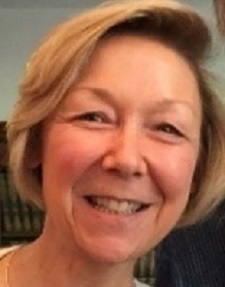
During Lucy Shortt’s 30 year career as a Speech and Language Therapist, she has worked with a broad client base both within the NHS and the independent sector. She has also run her own private practice. In her current role as Wellbeing Co-ordinator and Consultant Specialist Speech and Language Specialist at Options Group, Lucy manages the clinical team at Options Higford and provides specialist operational and clinical support across multiple fostering, care and education sites.
Clinically her areas of specialism include: Learning Disability and Difficulties, Autistic Spectrum Conditions (ASC), Social Communication Disorder (SCD) Central Auditory Processing Disorder (CAPD), Specific Language Disorder and Social Emotional and Mental Health difficulties.
Lucy strongly believes in the need for mutual respect in an organisation and a person centred multi-professional approach. She is committed to striving to provide quality clinical intervention, support, training and supervision.
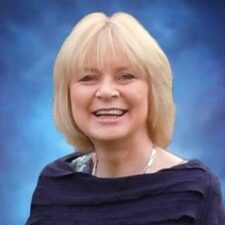
Frances O’Neill is an Autism Trainer/Advisor at Middletown Centre for Autism. Frances has worked in Special, Post Primary and Further Education settings. She holds Post Graduate Certificates and Diplomas in Education and an MSc in Autism.
Middletown provides specialist educational services, delivers training, carries out research.
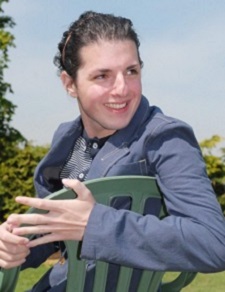
Paul Isaacs is an autistic trainer, speaker, consultant and blogger. He has co-authored several books including Life through a Kaleidoscope and Living through the Haze.
Paul was branded as a “naughty & difficult child” at school. He was classically autistic and non-verbal due to speech articulation difficulties. He had complex sensory issues and appeared both deaf and blind. He gained functional speech around the age of 7 or 8 years old.
Paul went through the mainstream school system with no additional help or recognition of his autism. Consequently, he did not achieve his academic or his social potential and had very low self-esteem.
At age 11, Paul was referred to the children’s mental health service with childhood depression where he was regarded as “developmentally underage” and having speech problems.
A local autism organisation put Paul in touch with an experienced psychiatrist, who diagnosed him with autism at 24 years old. Amongst other conditions, Paul also has dyslexia, dyscalculia and also a dissociative disorder.
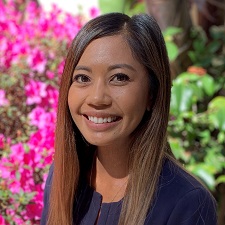
Dr Jasper Estabillo is the Director of Training at the UCLA Tarjan Center and a Clinical Instructor in the UCLA PEERS Clinic. She received her doctorate in Clinical Psychology from Louisiana State University and completed her predoctoral and postdoctoral training at the UCLA Semel Institute for Neuroscience and Human Behavior and UCLA Department of Psychology.
She has worked with individuals with intellectual and developmental disabilities and their families in a variety of research and clinical settings, and she has extensive experience training clinicians in evidence-based behavioral and mental health interventions.
Her work focuses on providing direct clinical services to families, improving clinical training of mental health providers, and expanding access to evidence-based interventions into communities.
Within 24 hours of your booking, you will receive an email containing personal login details to stream all of the recorded webinars and view the available presentation slides for a 30 day period.
If you don’t receive your login details, or have any difficulty accessing the webinars, please contact us at info@autismlearns.co.uk.
| Streaming Cost | £84.99 |