Managing Anxiety & Mental Health
An online learning series
Stream all presentations for 30 days

Stream all presentations for 30 days
Growing up is hard enough if you’re neurotypical but for autistic children, the school years, adolescence and the transition into adulthood is a particularly vulnerable time. Their communication and social interaction difficulties, can both contribute to, and cloak, a decline in mental health. Studies have shown that autistic people are three times more likely than the general population to experience mental health issues, with anxiety, stress, and depression commonplace.
In this new online learning series, our team of leading autism professionals will provide you with the practical skills and knowledge to maintain good mental health in autistic children and young adults. You’ll learn how to unravel the causes of anxiety, how to spot the warning signs of delicate or declining mental health, and what you can do to help.
Learnings include:
All content is CPD certified for professionals and a CPD Certificate of Attendance is available upon request.
| Session | Title | Speaker |
|---|---|---|
| 1.1 | Are you helping or exacerbating the behaviour? How to adapt your teaching style to help reduce stress and distress in autistic students | Pete Wharmby, Neurodiversity Speaker, Author, Tutor and Parent |
| 1.2 | The school environment: meeting the needs of autistic students to promote good mental health | Lydia Harris, DE&I Specialist and Neuroinclusion Advocate |
| 1.3 | Supporting anxiety and depression in autistic people | Dr Ann Ozsivadjian, Independent Clinical Psychologist, Visiting Senior Lecture at King’s College London, and Author of ‘Helping your autistic child’ |
| 1.4 | Meaning matters: why passion-powered work supports autistic wellbeing | Connor Ward, Neurodiversity Trainer, Consultant and Speaker (Autistic) |
| 1.5 | Supporting autistic children and teens with anxiety at home | Jane Gurnett, Co-Founder and Director of Act for Autism |
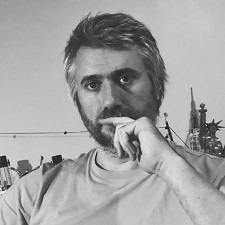
Pete Wharmby is an autistic speaker, writer, tutor and parent, who is working to improve autism acceptance in society by sharing his insights and experiences of autism.
Pete has spoken at many conferences and events, often as the keynote speaker, on topics such as autism in education, the experience of autistic students and teachers, the importance of monotropism and special interests.
He is also an autistic parent and home-schooler.
Pete has written two books on the autistic experience – 2022’s What I Want to Talk About, published by Jessica Kingsley Publishers, and 2023’s Untypical, published by HarperCollins. His third book, on autism and education, will be available in September 2026.

Dr Ann Ozsivadjian is a clinical psychologist with expertise in autism spectrum condition and other neurodevelopmental conditions. Ann specialises in children and families, and also works with young adults. She provides therapy, and also conducts diagnostic assessments, in conjunction with colleagues.
Ann has a particular interest in mental health difficulties that occur in the context of an autism spectrum condition. She also provides specialist training to services, including NHS CAMHS teams.
Ann treats a range of problems including anxiety and depression, low self-esteem, and distressed behaviour. As her training is generic, she also has the skills to assess and treat children and young people with emotional or behavioural problems who have only features of ASC, or indeed those with no features of ASC at all.
Ann has substantial experience in the differential presentation of girls and young women on the spectrum, and also extreme demand avoidance presentations.
She is the author of ‘Helping your Autistic Child’, published by Little Brown Book Group.
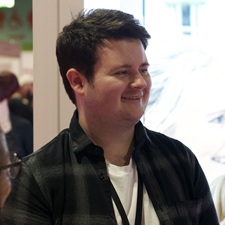
Connor Ward is a neurodiversity trainer, consultant, and speaker who uses his lived experience of neurodivergence to help organisations better understand and support neurodivergent people.
He began by sharing his experiences online to increase understanding of autism, quickly building a large community of neurodivergent people and allies. Through this work, alongside volunteering with the National Autistic Society and studying design, equity, diversity and inclusion (ED&I) and neurology, Connor developed a strong understanding of neurodivergent experience from both lived and professional perspectives.
Connor now works with organisations to embed accessibility into the design of their products, services, and workplaces. He is a member of the Oliver McGowan Mandatory Training Steering Group for NHS England, helping shape the national autism and learning disability training programme for health and social care professionals.
He also speaks regularly at major events and contributes to national media, while supporting policy development through work with Westminster and UK Parliament.
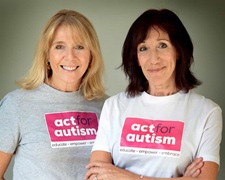
Jane Gurnett brings a wealth of experience in performance, education, and autism advocacy. As an actor, she has worked extensively in television and theatre, with notable roles in Dangerfield and Casualty, as well as leading performances with the Royal Shakespeare Company, the National Theatre, and West End musicals.
Beyond her acting career, Jane is a dedicated drama tutor and mentor, shaping the next generation of performers while also teaching in mainstream education. She holds a BA (Hons) in Theatre Studies, an MA in The Advanced Workings of Shakespeare, and a BPhil in Autism from Birmingham University.
Jane is deeply passionate about ensuring every child has a voice. Through her work with Act for Autism, she develops innovative workshops and strategies that empower autistic individuals and educate the wider community on inclusion and understanding.
Within 24 hours of your booking, you will receive an email containing personal login details to stream all of the recorded webinars and view the available presentation slides for a 30 day period.
If you don’t receive your login details, please check your spam/junk folder in case it was diverted there. Otherwise for any difficulties accessing the webinars, please contact us at info@autismlearns.co.uk.
| Streaming Cost | £84.99 |
| Session | Title | Speaker |
|---|---|---|
| 2.1 | Interoception: why is it crucial to self-regulation and understanding your mental health and anxiety? | Dr Jo Grace, Autism Specialist, Qualified Teacher and Experienced Neurodivergent Leader |
| 2.2 | Understanding Anxiety in Autistic Children | Aaron Yorke, Specialist Teacher and Autism Advisor, and Co-Founder of Accepting Behaviour |
| 2.3 | Suicide and suicide prevention in autistic teens and adults | Dr Rachel Moseley, Principal Academic in Psychology at Bournemouth University and co-author of ‘Autistic Menopause’ |
| 2.4 | Sleep and mental health in autism: practical strategies to promote better sleep | Jan Jenner, Sleep Specialist and Founder of Hunrosa |
| 2.5 | Autism, sensory processing and eating disorders | Rachael Thompson, Occupational Therapist and Founder of Our Sensory Worlds |
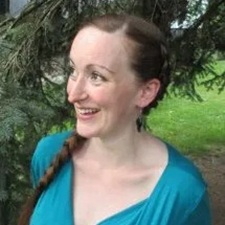
Dr Joanna Grace is an international sensory engagement and inclusion specialist, doctoral researcher, trainer, author, TEDx speaker and founder of The Sensory Projects. The Sensory Projects’ online college has a range of study on demand courses, focused on sensory engagement and supporting people with profound disabilities
Joanna is a qualified teacher who has taught in mainstream and special schools, connecting with pupils of all ages and abilities. Joanna has also worked in a consultancy capacity to support schools to further their provision for children with additional learning needs.
Since setting up The Sensory Projects Joanna’s work has expanded, and she regularly works with adult care providers, heritage settings and families. Joanna draws on experience from her own life, as well as insight from the research world and her professional background, to inform her work. Joanna has family members with physical disabilities and neurodiverse conditions and has also been a foster carer for children with complex disabilities.
Joanna is autistic and is able to take in huge amounts of information. She uses this ability to focus on the sensory world to inform her work. Joanna is currently studying for a doctorate in Identity and Belonging for People with Profound and Multiple Learning Disabilities.

Aaron Yorke is an autism advisor and education consultant. With experience as a Local Authority Autism Advisor, and specialist teacher, he has supported families, schools and professionals on achieving best practices for supporting autistic students who have not been able to engage in learning.
Recognising the limitations of conventional approaches, he developed The ACCEPT Approach and founded Accepting Behaviour Ltd in 2019, a specialist provision dedicated to supporting autistic students who cannot engage in traditional education. He now leads a team of specialist teachers and tutors commissioned by Local Authorities to support autistic students using his acceptance-based model of learning.
Aaron advocates for an education system that values and adapts to autistic students rather than expecting them to conform to rigid structures. As an autistic adult, he combines professional expertise with lived experience, offering a unique and deeply informed perspective on inclusive education. He is committed to empowering students, equipping educators, and supporting families to create genuinely inclusive learning environments.
His work challenges the shortcomings of traditional education models, highlighting the systemic gaps in support that have left many autistic students and their families marginalised and without the necessary support needed to succeed.
By shifting the focus to acceptance-based support, he advocates for meaningful, student-led approaches that genuinely meet the needs of autistic learners.

Dr Rachel Moseley completed her PhD in cognitive neuroscience at the University of Cambridge, where she studied brain function and structure in autistic people. After her PhD, Rachel took up two positions as a postdoctoral researcher to pursue this research further. In the course of learning more about the presentation of autism in girls and women, she sought assessment and was diagnosed as autistic, which helped answer a lot of questions.
Rachel is now a Principal Academic at Bournemouth University, where her research centres around understanding the challenges faced by autistic adults – most notably around mental health, self-injury and suicidality, ageing and late-diagnosis.
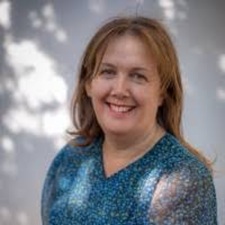
Jan Jenner has worked in behavioural sleep medicine since 2008. Since 2015 she has worked within the National Health Service.
Jan founded Hunrosa Sleep consultancy, a multidisciplinary team of professionals who use CBTi among other approaches to resolve sleep issues. Jan has specialist knowledge in additional needs and sensory dysregulation and runs regular accredited training sessions for the NHS and educators, incorporating the use of the Sleep Wise app for the under 25s. Hunrosa is the only contracted NHS private provider in the UK.
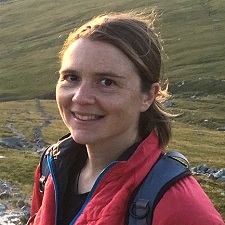
Rachael Thompson BSc, PGCE with QTS, PGCert Sensory Integration, MSc Occupational Therapy is Head of Therapy at Cairn Education. Rachael has worked at independent specialist colleges for over 10 years in roles including Tutor, Occupational Therapist, Head of Education and Vice Principal.
As an autistic individual and Occupational Therapist, Rachael utilises personal and professional experience alongside the latest research to explore sensory processing differences and specifically how sensory processing differences can impact health, well-being and quality of life.
Within 24 hours of your booking, you will receive an email containing personal login details to stream all of the recorded webinars and view the available presentation slides for a 30 day period.
If you don’t receive your login details, please check your spam/junk folder in case it was diverted there. Otherwise for any difficulties accessing the webinars, please contact us at info@autismlearns.co.uk.
| Streaming Cost | £84.99 |