Understanding & Reducing Distressed Behaviour
An online learning series
Stream all webinars for 30 days

Stream all webinars for 30 days
In this new online learning series, our team of leading autism specialists will be taking a fresh look at distressed behaviour in autistic children and young people. Often misunderstood, behaviour which is labelled as “challenging” is frequently a communication of unmet needs, sensory overload, anxiety, or distress.
We’ll explore evidence-based and neurodiversity-affirming approaches to understanding and reducing distressed behaviour. Bringing together expert practitioners, neurodivergent educators, therapists and lived experience voices, these webinars are packed with practical strategies to help parents, family carers, educators and other professionals provide support that works.
You’ll gain insights into what’s really driving behaviour – and walk away with a toolkit of realistic and effective ideas to help reduce distress, build trust and support emotional wellbeing in a home and school setting.
Learnings include:
All content is CPD certified for professionals and a CPD Certificate of Attendance is available upon request.
| Session | Title | Speaker |
|---|---|---|
| 1.1 | Beyond behaviour: rethinking support for autistic students in mainstream schools | Zoë Austin, Autistic Tutor, Trainer and Consultant |
| 1.2 | Creating sensory inclusive schools for neurodivergent students: understanding sensory differences behind behaviour | Beth Smithson, Director of Lifelong Learning at Sensory Integration Education, Lead for Sensory Inclusive Schools, Advanced Sensory Integration Practitioner, and Occupational Therapist |
| 1.3 | Strategies to help autistic children regulate in the classroom | Amanda Hind, Autistic Speaker, Trainer and Consultant |
| 1.4 | From anxiety to attendance: a simple framework for helping students overcome Emotionally-Based School Avoidance (EBSA) | Simon Currigan, Founder of Beacon School Support and Co-host of the School Behaviour Secrets podcast |
| 1.5 | Sleep: overlooked and underrated | Chris Hoyle, Founder of Sleep and Therapy Services and qualified Speech and Language Therapist |
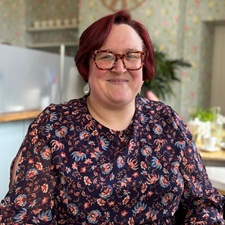
Zoë Austin is a freelance neurodivergent and trauma-informed speaker, trainer, educator and consultant living in Cambridgeshire and working across the UK.
She divides her time between consulting on how mainstream schools (and other institutions) can better meet the needs of neurodivergent members, providing group and individual music sessions, 1:1 tutoring for autistic/ADHD school-age children, mentoring autsitic/ADHD university students, and writing/presenting on the subjects of neurodiversity, child development, and music-making.
Part of the Pen Green Schema Group, she contributed to the book Schemas in the Early Years (Routledge, 2022), and presented on ‘Schema theory and children’s emerging musicality’ at EECERA, 2023.
Zoë uses her past experiences as a (Pen Green-trained) classroom teacher, her MA in Music Therapy and past experience of working in children’s social services to inform her position as a holistic practitioner.
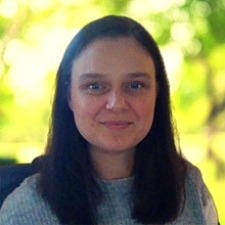
Beth Smithson is a dedicated Occupational Therapist with 19 years of experience supporting children, young people, and families across health, education, and social care. Her journey began in the NHS, where she worked in paediatric services, and expanded into education, social services, and the voluntary sector, both in the UK and internationally. Beth has managed integrated occupational therapy teams, developing services that prioritise inclusion and accessibility for individuals with sensory processing challenges.
Currently, Beth works as a programme facilitator for Sensory Integration Education, where she mentors and supports postgraduate students while curating lifelong learning opportunities. Beth also serves as a clinical mentor for sensory integration training in partnership with Sheffield Hallam University. Her role allows her to combine clinical expertise with a passion for empowering others through education.
Throughout her career, Beth has advocated for the importance of understanding and supporting unique sensory systems. She believes that environments and relationships are critical to fostering participation and that addressing sensory needs holistically can transform lives. Beth’s work is rooted in collaboration—whether supporting families, training educators, or mentoring fellow therapists—to ensure every individual has the opportunity to thrive.
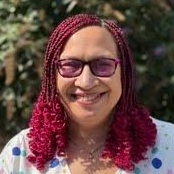
Amanda Hind has a unique perspective of autism as she is late-diagnosed autistic, her children (young adults) are autistic, she specialises in teaching autistic children, and she is an autism researcher.
She is a highly experienced teacher; having taught in mainstream primary and secondary schools and specialist provisions for almost 20 years. She is also a qualified SENCo.
Amanda enjoys working with children and young people, and specialises in tutoring autistic children of all ages, and mentoring for neurodivergent adults, young adults, and teenagers. She is also a study skills tutor and mentor for autistic university students in receipt of Disabled Students’ Allowance. Amanda was a finalist in the Best Special Needs Tutor category of the National Tutoring Awards 2023.
Amanda is an experienced autism speaker, trainer and consultant. She started her business in 2014; and has delivered talks and training sessions nationally and internationally on a wide variety of topics to a range of attendees, including parents and professionals from education, health and the care sector. She is also an NHS approved trainer on The Oliver McGowan Mandatory Training on Learning Disability and Autism for health and social care providers. Amanda also provides bespoke consultancy services for families and professionals.
Amanda is particularly interested in the experiences of autistic women and girls, especially those who received a late diagnosis. She is also keen to explore the impact of intersectionality on marginalised groups. She is thrilled to be studying for a PhD in Psychology at the University of Southampton, as a member of the Autism Community Research Network @ Southampton (ACoRNS), with her research exploring the school experiences of Black and Black mixed heritage women and girls with a later diagnosis of autism. Amanda has won a prestigious Black Futures scholarship for her PhD studies.
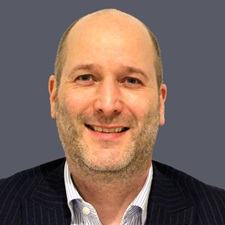
Simon Currigan is the Founder of Beacon School Support and the Co-host of the School Behaviour Secrets podcast.
Simon helps schools, teachers, and families when behaviour becomes a barrier to success. For a growing number of children, social, emotional, and mental health needs are holding them back. Making what should be the happiest years of their life full of stress, anxiety and negativity. That’s why he’s passionate about digging into the ‘why’ behind behaviour, unpicking underlying needs, and finding the right adaptations and support to address them.
Because when we get that right, we can help children overcome barriers, achieve their potential within the education system, and build fulfilling, successful lives. But for many, the future looks bleak. The exclusion-to-prison pathway is well-trodden, and those challenges can feel impossible to overcome. But it doesn’t have to be that way.
Simon believes that we can transform the lives of many struggling children with the right support. That belief comes from years of teaching permanently excluded children and over two decades of supporting thousands of teachers across hundreds of schools. He’s seen firsthand what works and what doesn’t through observing countless children in various settings.
Simon has also interviewed SEMH experts from around the world for his podcast, School Behaviour Secrets, focusing on the latest, evidence-based approaches. Most importantly, he’s distilled those often complex theories into practical, step-by-step strategies that teachers and parents can actually use in the real world. Making a lasting, positive impact for our children and students.
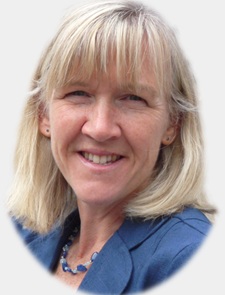
Chris Hoyle qualified as a Speech and Language Therapist in 1990 and has a long-standing interest in working with children with communication difficulties. After working for a local health authority, she moved to work at a specialist school for children with autism in 1999 and whilst there trained as a sleep practitioner in 2005. As soon as she began doing sleep work, initially just with parents of the pupils at the school, she realised what a colossal problem sleep was for so many of our families and was shocked that she had never asked questions about it before!
Chris established an autism specific sleep clinic in 2007 and in 2011 she was awarded an MA in Autistic Spectrum Conditions with distinction having completed her postgraduate research in autism and sleep.
Her passion to help families resolve sleep issues led to the expansion of the work and in 2016 funding was secured from Children in Need to expand the service across the North West. This led to the development of two commissioned sleep services for local authorities in the North West, including running sleep clinics and training for professionals and have been held as models of best practice which were shortlisted for National Autistic Society Professionals Awards in 2018 and 2019.
Chris became a moderator for the NAS Accreditation team in 2014 and has continued in this role to date.
Since 2015 she has also worked as an Autism Consultant at Rowan Tree school in Wigan. Her role in the school includes leading on training in visual strategies to support communication, developing a whole school approach to issues such as understanding restricted diets and continence; as well as running parent workshops and offering individual family support. Chris was delighted that Rowan Tree won Specialist Provision School of the Year award at the TES Schools Awards 2023 for our work on restricted diets.
Chris believes that sleep should be prioritised as a first line of intervention for every child as improving a child’s sleep has a cascading effect on all aspects of the child’s health and well-being.
Within 24 hours of your booking, you will receive an email containing personal login details to stream all of the recorded webinars and view the available presentation slides for a 30 day period.
If you don’t receive your login details, please check your spam/junk folder in case it was diverted there. Otherwise for any difficulties accessing the webinars, please contact us at info@autismlearns.co.uk.
| Streaming Cost | £84.99 |
| Session | Title | Speaker |
|---|---|---|
| 2.1 | When the naughty step makes things worse: understanding what autistic children really need | Dr Naomi Fisher, Clinical Psychologist, EMDR-Europe Accredited Trainer and Author |
| 2.2 | Practical solutions for toileting and smearing: empowering families and carers | Lorraine MacAlister, Autism Trainer Consultant and Conferences Lead at the National Autistic Society |
| 2.3 | When behaviour hurts: helping autistic people with LD to reduce self-injury and physical behaviours - What are they trying to tell us through their actions and reactions? - What else might be contributing? - How do we find out – problem solving - Environmental level - Individual level | Dr Penny Williams, Consultant Speech and Language Therapist at Evelina London Children’s Hospital, Guy's and St Thomas' NHS Foundation Trust |
| 2.4 | Supporting emotional regulation and mental health in autistic people | Dr Ann Ozsivadjian, Independent Clinical Psychologist, Visiting Senior Lecturer at King's College London and Author of 'Helping your Autistic Child' |
| 2.5 | Difficult or inappropriate sexual behaviours | Kate E Reynolds, Author, Consultant and Speaker, also known as Autism Agony Aunt |
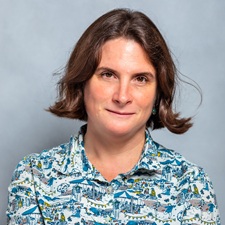
Dr Naomi Fisher is a clinical psychologist and EMDR-Europe trainer. She specialises in autism, trauma and alternative education. She has written several books including ‘When the Naughty Step Makes Things Worse’ and ‘The Teenager’s Guide to Burnout’ with Eliza Fricker. She runs webinars and writes mini-courses for parents. Her work can be found at www.naomifisher.co.uk.
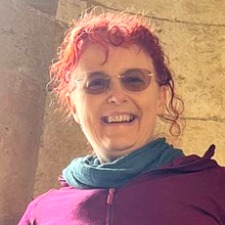
Lorraine MacAlister is Autism Trainer Consultant and Conferences Lead at the National Autistic Society.
Lorraine has worked with autistic people, colleagues, families and practitioners since 1997. After a background in residential and family services, she joined the National Autistic Society in 2005.
Since then, she has delivered autism training to professionals, autistic people and families; covering a range of topics including autism and sensory differences, continence, education, employment, and women and girls. She has delivered training across the UK and internationally, and spoken at a variety of conferences for the NAS and other organisations.
Lorraine also works alongside the Online Training Manager on the development of our e-learning courses.
Along with Dr Eve Fleming, Lorraine co-authored the book Toilet training and the autism spectrum: a guide for professionals (2016), and has written a variety of articles on professional practice for the National Autistic Society.
Lorraine is passionate about increasing knowledge and understanding of autism and trying to ensure that autistic voices are at the heart of what we do.
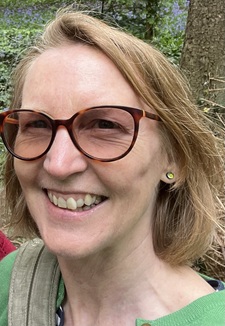
Dr Penny Williams is a Consultant Speech and Language Therapist with over 25 years of experience specialising in complex communication disorders including those seen in autism and other neurodevelopmental conditions.
Her PhD explored parent perceptions of their role in speech and language interventions in young children.
Her clinical and academic interests include language profiles in epilepsy, actions and response indicative of distress in children and working with parents.
She has been involved in writing, developing and contributing to national policy and guidance in the field of autism, including for NICE, NHSE and RCSLT. She has also led and consulted on diagnostic service redesign in community services.

Dr Ann Ozsivadjian is a clinical psychologist with expertise in autism spectrum condition and other neurodevelopmental conditions. Ann specialises in children and families, and also works with young adults. She provides therapy, and also conducts diagnostic assessments, in conjunction with colleagues.
Ann has a particular interest in mental health difficulties that occur in the context of an autism spectrum condition. She also provides specialist training to services, including NHS CAMHS teams.
Ann treats a range of problems including anxiety and depression, low self-esteem, and distressed behaviour. As her training is generic, she also has the skills to assess and treat children and young people with emotional or behavioural problems who have only features of ASC, or indeed those with no features of ASC at all.
Ann has substantial experience in the differential presentation of girls and young women on the spectrum, and also extreme demand avoidance presentations.
She is the author of ‘Helping your Autistic Child’, published by Little Brown Book Group.
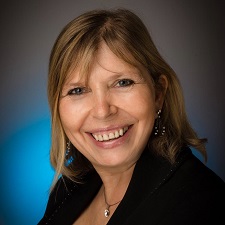
Kate E Reynolds is mother to two young adults on the autism spectrum, one with additional learning/intellectual disabilities. She worked for 18 years for the UK’s National Health Service, mainly in HIV/AIDS and sexual health as a Clinical Nurse Specialist, Senior Counsellor and trainer.
Since 2005, when her son was diagnosed as being on the autism spectrum, Kate has written twelve books and innumerable published articles for parents and professionals, focusing on aspects of relationships and sex education, childhood and female autism and smearing behaviours.
Kate is a public speaker at both national and international conferences. She also runs workshops and training for parent carers and professionals, largely focusing on a broad range of relationship and sex education issues and autism and intellectual disabilities. These include so-called ‘problematic, sexualised’ behaviours, sexual abuse, female autism and relationships and generic relationships and sex education both in schools and adult life.
Kate gives specific advice to families and agencies relating to sexuality and relationships.
She has written a three book Healthy Loving, Healthy Living series for adults with autism, special educational needs and disabilities for Jessica Kingsley Publishers/Hachette which was published in 2021/2022.
At present, Kate is studying for her PhD by building on her Masters’ focus of relationships and sexuality, autism and intellectual disability.
Within 24 hours of your booking, you will receive an email containing personal login details to stream all of the recorded webinars and view the available presentation slides for a 30 day period.
If you don’t receive your login details, please check your spam/junk folder in case it was diverted there. Otherwise for any difficulties accessing the webinars, please contact us at info@autismlearns.co.uk.
| Streaming Cost | £84.99 |